
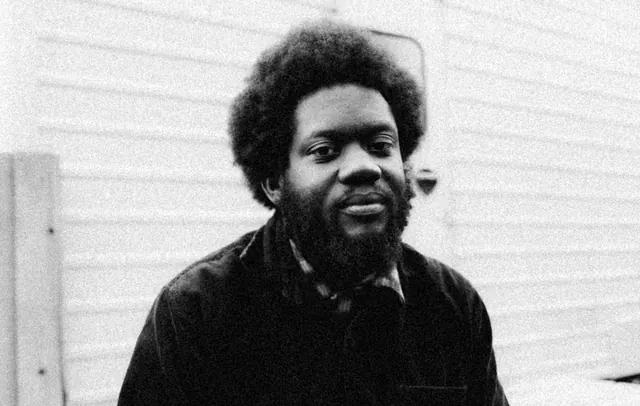
Michael Kiwanuka. Credit: Jodie Canwell
The muted, rumbling rhythm sections; the warm guitar tones and grounding basslines; the strings that cut like a Japanese knife through the soft soulfulness; and the rich, humble voice that brings it all together: at its core, Michael Kiwanuka ‘s new record ‘Fudge’ traces a continuous path from his last album, 2024’s critically acclaimed ‘Small Changes’ . But the world the Mercury Prize -winning singer-songwriter is living in couldn’t be more different.
“I want to tell people why I haven’t been around. Everyone can relate to pain and struggle.
That’s one thing all humans have in common. So I’m just sharing mine with the world,” Kiwanuka reflected in a recent Guardian interview outlining the devastating explanation for last summer’s cancelled live shows , and the silence that followed.
Last July, the then-38-year-old suffered a haemorrhagic stroke caused by undiagnosed high blood pressure; he underwent emergency surgery, months of intensive care and many more months in rehabilitation at a medical centre in Hampshire, where he remains today.
This album was recorded before all that, self-produced in a studio near Kiwanuka’s Southampton home alongside trusted collaborators, like multi-instrumentalist Joe Connell. Later, there were valuable contributions from producer Dom Monks ( Laura Marling , Big Thief ) and long-standing strings collaborator Rosie Danvers ( Adele , Coldplay ). As the album’s bright bubblegum visual identity suggests, ‘Fudge’ was a drive for playfulness and experimentation; but it was created by a man on the precipice of unforeseen tragedy.
It’s impossible not to post-rationalise the record’s lyrical content. The revelation of Kiwanuka’s struggle to retrain his vocal cords after his breathing and speech were impacted by stroke-induced brain damage lends greater emotional heft to the spacious chorus of penultimate track ‘Sing’: “We’re nowhere if we never sing / Sing / Sing”.
His vocals have always found beauty in a tendency to waver and show fragility; this peaks on ‘California’, where he sings “I need love, love, love, to take me home / I’ve been gone, gone, gone for way too long” , his melancholic tone resonating deeply at a time when illness continues to block his creative spirit.
At the climax of ‘Drowning in Your Heart’, the twisting and extinguishing of a haywire violin rings like the uncomfortable conclusion to a chapter dramatically slammed shut. In the space-traversing synths, crashing cymbals and fuzzy, virtuosic guitar of ‘Love In My Heart’, you’ll find Kiwanuka’s revered penchant for grand, epic sonic progressions; but the track’s long, pensive piano outro suggests a retreat away from the fire.
Given the uncertainty around his future musical possibilities, this album is both an unexpected gift and a deeply poignant glimpse at the creative state before a life-altering moment. Drink it in, let it warm your soul, and be reminded how lucky we are to have an artist like Kiwanuka.
Related Topics
More Stories
Details
Nieve Ella – ‘How Long Will It Take?’ review: coming to terms with the messiness of growing up
Rachel Chinouriri – ‘I Think I Spoke Too Soon’ review: a glittering comedown on the dancefloor
Troye Sivan – ‘She’s the Best’ review: late-night revelations set to a ’90s alt-dance groove
Chrissi – ‘I Hate You Don’t Leave Me !’ review: a layered look at love, loss and self-doubt
You May Also Like