
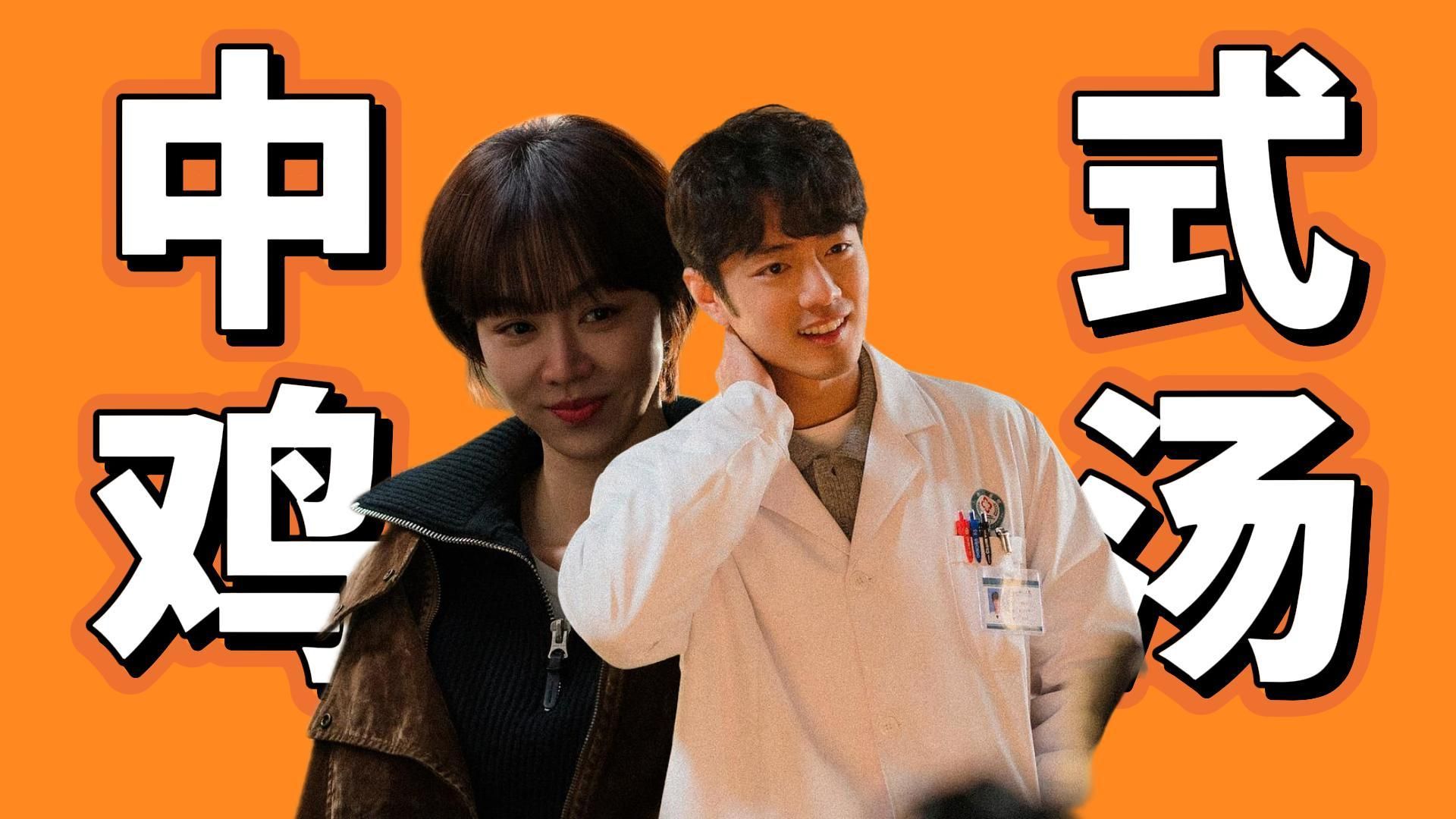
I recently came across a new drama called "Small Town Remedy," starring Xiao Zhan. This drama may well represent the current state of creation in many Chinese domestic dramas, so I'd like to talk about it.
The last time I watched a Xiao Zhan drama for any length of time was "The Legend of Zang Hai," which he headlined. That was a costume political-intrigue drama, somewhat similar to shows like "Nirvana in Fire"—a revenge epic in which the male lead carries the burden of his family's massacre, changes his identity, and returns to the chessboard. While it was decent to watch, it still carried elements of costume romance, with plenty of shortcomings in plot, logic, and emotional scenes.
Still, "The Legend of Zang Hai" showed Xiao Zhan's progress and evolution as an actor: he no longer strains to prove "I am an actor," and his portrayal of characters and stories feels far more composed. "Zang Hai" also earned Xiao Zhan his first recognition from a mainstream award—a nomination for Best Actor at the Magnolia Awards, making him, at 34, the youngest Best Actor nominee in the award's history.
Years earlier, however, Xiao Zhan had been a newcomer who won the "Most Disappointing Actor" award at the 11th Golden Broom Awards for "Jade Dynasty."
When we comment on film and television works, we should follow the principle of "judging the work as the work." As for actors, it is more meaningful to look vertically at whether they have improved: are they a competent actor, a gold-medal actor, or a resource-hustling slacker standing still?
Back to "Small Town Remedy." As the male lead, Xiao Zhan seems to have made further progress compared to "The Legend of Zang Hai," and compared to some of the dramas after the huge success of "The Untamed," the improvement is considerable—even though this owes much to the script, the story, and the support of the surrounding ensemble cast.
"Small Town Remedy" is a medical slice-of-life drama about an elite male doctor who hits rock bottom in life and returns to his hometown to rebuild himself. Xiao Zhan plays Liu Zhengliang, originally an attending physician at a major hospital in Shenzhen, whose career collapses after a medical accident caused by a failed off-site "flying knife" surgery—leaving him unemployed, paying compensation, and back to square one.
Just at that moment, Liu Zhengliang, who has lost his memory, receives news that his mother has gone missing, and he has no choice but to return to his hometown of Fengcheng, an obscure eighteenth-tier small city in Northeast China.
Everything in the small city feels strange and alien. Just two days after he returns, his younger brother suddenly falls ill and needs brain surgery to recover. But almost no one in Fengcheng is capable of performing that surgery.
After much deliberation with his childhood friend Chen Junnan and others, the male lead finally "sells himself" to the rundown Xiaoximen Hospital as a doctor in exchange for the right to perform his brother's surgery himself. And so begins a warm, comedic journey of a once-promising young doctor fallen from grace, awakening his colleagues at a shabby little hospital, treating patients, and finding mutual redemption.
Xiaoximen Hospital has a terrible local reputation and is on the verge of closing, and the lack of reliable, good doctors is one of the core reasons. The doctors there all have their own problems to varying degrees—whether in their medical skills, their family situations, and so on. The male lead's arrival means "healing each other": as an atypical team, they help patients together and each finds a second-best solution to medicine and to life.
The drama's reputation so far is not bad, and it has a certain level of popularity. Its strengths are fairly obvious, while its weaknesses require a bit more thought. What makes it good: first, a relatively authentic texture of everyday life; second, vivid ensemble characters presented on an equal footing; and third, the humor and warmth the series exudes.
The original novel's author, Liu Sanshu, is from Fushun, Liaoning, and the novel contains many Northeastern elements; the adaptation's screenwriter, Nie Chengshuai, is also from the Northeast. Moreover, apart from Xiao Zhan, the cast—including Jiang Yan, Ni Dahong, Wang Yanlin, Shi Pengyuan, Jiang Long, Zhang Guoqiang, Liu Hua, and many other seasoned actors—are all from the Northeast.
Combined with the production crew's on-location filming in Jinzhou, Liaoning, the drama genuinely carries a Northeastern local flavor—down-to-earth and grounded in everyday life.
Unlike the oppressive and gloomy tone of past Northeast-set crime or nostalgia dramas, this show—from the taxis at the train station and the old factory buildings, to barbecue, cold noodles, and tabletop hot pot, from small-town interpersonal relations to blunt Northeastern dialect—presents a relatively authentic picture of today's Northeastern small towns, which have experienced industrial decline and waves of layoffs, then stumbled their way into a new era starting over from scratch.
Some of them appear to earn four to five thousand yuan a month at their workplace, but behind that are elderly parents and children; some were laid off from the old factory and make a living through odd jobs, their minds and hearts forever stuck before the great migration; some roamed the underworld in their youth with their own code of honor, but in old age have only their reputation left, relying on their daughter's career change. These people were born in Fengcheng, live in Fengcheng, and grow old in Fengcheng, living their ordinary days through icy, bitterly cold winters.
Beyond the sparks generated by the interactions between the protagonist's family and friends and his hospital colleagues, what matters more is the show's equal-footing treatment of and respect for all its characters: they live their own vivid lives, and the plot does not deliberately excavate their full stories, but instead shows us—and the protagonist—only a part. The protagonist's perspective is actually like that of a tourist, and through him we enter this small city and this little hospital, seeing one reborn life after another struggling—striving, lying flat, or dragging themselves along.
Especially the patients' family members. When these people come to Xiaoximen seeking treatment, they more or less have some special sticking points, but when the camera turns to them, there is no portrayal of suffering for its own sake, no trafficking in sympathy, no moralizing judgment: whether it's the migrant worker couple who stubbornly insist they're not short of money, the restless woman who firmly refuses skull-repair surgery, or the dapper old flirt juggling multiple romances in his twilight years—their lives are simply life itself, needing no embellishment, with their own bitterness, spice, and sweetness, each of them tasting their own flavor.
And within this mixture of flavors, there is always, from time to time, a distinctly Northeastern humor and warmth: joking about life and death, facing setbacks, they cheerfully prop each other up—tough-tongued but soft-hearted, sharp-mouthed but warm-hearted, offering each other comfort.
With a slice-of-life texture tinged with light comedy, and using medicine as its shell, "Small Town Remedy" tells how ordinary, everyday people get through the long days, generation after generation. These stories of mingled sorrow and joy, sometimes laughing through tears, are in essence a true spiritual balm—one might even call it a bowl of emotional chicken soup, soothing the hearts of today's viewers.
As a drama broadcast on both satellite TV and streaming, watched in living rooms and aimed at the general public as a mealtime show, this kind of drama is destined to be popular with a certain circle of viewers. The current viewership data also reflects its performance: it has its established audience, but due to limitations in subject matter, story, and lead actors, it is difficult for it to break into a wider circle.
In the future, the drama will surely have second and third runs on satellite TV channels, because it is in fact a "main-melody drama" within contemporary slice-of-life dramas.
Unlike genre dramas such as political intrigue, costume romance, suspense, or mystery, main-melody dramas carry a clear need to echo the narratives of the times, taking the nation, its people, and the spirit of the era as their primary subjects of expression—works like "The Tree of Life," "Minning Town," "Small Town, Big Events," and "A Long Way" all belong to this category. Within this lineage, "Small Town Remedy" is a drama of above-average production quality: it has no grand theses, no hype, no slogans or rallying cries; its focus is on soothing hearts—that is, it does not shoulder any major propaganda mission, but emphasizes keeping to one's duties and living one's days, echoing the folk mentality of "simply getting on with life."
In terms of ratings, "Small Town Remedies" peaked at number two and now hovers around 1.5, ranking second in the prime-time slot behind "The Great Long March." In online streaming, its market share on Yunhe is around 15%, ranking second, below the top-ranked "Marrying the Golden Hairpin," which holds a 30% market share—but higher than "Princess Shang" and "Yu Dian Qiu," both starring traffic idols in the same period. Its platform heat score has surpassed 9,600, not far from breaking 10,000, making it a modest hit.
In fact, "Small Town Remedies" resembles two other dramas: "Steaming Ahead," which aired a while back, and "South to North" from 2024. The former is a small-town life drama, while the latter is a period drama set along the railways. Although the three differ in subject matter, they all present their stories through a combination of northeastern settings, light comedy style, and quasi-episodic storytelling.
Compared with the other two, "Small Town Remedies" actually has more flaws: some unnecessary settings and portrayals of the male lead's character, plot points that don't hold up to scrutiny, and overly NPC-like medical case stories, all of which somewhat lower the show's rating.
The original novel on which the drama is based is actually more grounded in everyday life and more vivid. Although it doesn't contain as many case-based episodes, the characters' personalities are more realistic and less gimmicky.
In the novel, the male lead does not have hemophobia, nor does he work in Shenzhen; instead, he is a doctor at a major hospital in Beijing, with both parents alive and well—laid-off workers from years past. As an only child, he tested his way into Beijing.
His "moonlighting scalpel" work was also a profit-making arrangement brokered by his classmate Chen Junnan, motivated in part by the desire to earn more money to buy a home in Beijing and settle down with his girlfriend.
Clearly, Liu Zhengliang in the novel is neither socially anxious nor an aloof, cold-faced man out of touch with human relations—he is precisely the most common kind of child from a small town who tested his way out: a family across two generations lifting him out of the Northeast, living an ordinary, worldly life.
Compared with the original, the current drama added extra personal storylines so that the male lead would bear no moral stains and would receive enough attention and sympathy: to avoid his accent being jarring, they set up a backstory in which he witnessed his father's death as a child, developed hemophobia, and was sent to grow up in the South; then environmental interference caused an accident, compounded by his mother's death, his brother's illness, and many other life burdens. It looks like a richer, more heavily painted portrait of Liu Zhengliang carrying more weight, but it actually distances him from ordinary viewers, even to the point of being unrealistic—this is where the adaptation falls short.
For example, he left his hometown as a child, yet childhood friends unconditionally come to support him—how exactly did they maintain those bonds? Doesn't matter; the plot needs it, so it exists. Or take his social anxiety and inability to work with others—how has he managed to work all these years? And then there's the romance line with the female lead, and so on.
The male lead Liu Zhengliang appears to be an all-capable doctor with godlike skills, yet somewhat clueless in daily life: forgetting to put the car in park, losing his wallet in a taxi, dropping his phone on a roller coaster. With the show now past its halfway point, four or five episodes are still devoted to his dilemma over whether to stay or leave.
The drama also deliberately chose Bengbu, a city on the dividing line between northern and southern China, trying to reinforce this metaphor. But in reality, dwelling too much on the character's psychological issues, decision-making struggles, and emotional problems ends up overshadowing the main story.
Both the original novel and the drama's title should point to real cases and stories, and to those second-best solutions—how those 80-point answers came about, were accepted, and were understood. As a medical drama, these stories are the main, natural draw that keeps audiences watching.
Although the drama's handling of medicine still leaves many professionals dissatisfied, the multiple hospitals and dozens of medical consultants are merely decorative safeguards against major blunders—much like the many historical consultants hired for many historical dramas. This is a drama broadcast on CCTV: it needs to give people strength while remaining stable and inclusive, content with the present, rather than seeking breakthroughs or probing the roots of problems.
So while "Small Town Remedies" looks like a medical drama, it is essentially not a true industry drama; medicine is merely the backdrop, just another vehicle for the story—a point it shares with most other Chinese industry dramas. The real, even bloody realities of the medical profession, the harsh yet warm tapestry of life, the healthcare system, doctor-patient relations, and more importantly, the situations and dilemmas of the various parties behind them—none of these will be faithfully portrayed in this kind of drama.
Don't take this show too seriously.
Essentially, being able to air on CCTV shows this is a family-friendly, positively oriented, heartwarming life drama. As such, it inevitably falls into being ordinary and bland in fact, a common ailment of many current Chinese dramas. This stems not only from the problems mentioned above, but even more from a conservative creative attitude, a faltering adaptation, a failing core narrative, and an unavoidable heavy hand.
Better domestic medical dramas include "Healing Love" and "The Doctors"; among foreign series there are "House" and "Hospital Playlist." Comparing industry dramas at home and abroad, we often sigh: what a huge gap. But that gap stems from our own limitations, especially for realistic dramas.
As for Xiao Zhan's performance, although he is not classically trained, his strengths lie in his built-in fanbase and buzz, giving him many opportunities to choose scripts and act in film and television; some projects only gained attention because an actor like him joined. But in the end, it comes down to an actor's foundation—acting. It's a profession where the ceiling depends on talent and the passing line depends on practice and diligence.
Xiao Zhan has this self-awareness. His output in recent years hasn't been large, and each release sparks plenty of controversy, but looking at it calmly, he has improved, and to some extent he is working hard to prove "I want to be a good actor"—unlike those male actors in their thirties still lingering in costume and modern romance dramas, still preening narcissistically with their cool-guy faces.
That said, one final point must be made: this kind of progress from a traffic idol is the combined result of piled-up resources, quality projects, and his own refusal to coast—many actors never get this opportunity. So let's say: despite the considerable improvement, compared with so many better actors and set against truly great dramas, there is still plenty of room for growth.
"Small Town Remedies"—a mainstream drama that represents the current state of Chinese television. Don't take it too seriously, don't get too invested; it's suitable for watching over a meal or binging after work. Alright, that's it for this episode. Don't forget to like, coin, and favorite—see you next time.